Reviews by
MaxDanger
114 reviews
-
 Saddam Hussein is trying to start a nuclear weapons program in Iraq with ex-Soviet bomb-builders. Stony Man tumbles onto the plan and launches an attack to intercept. Man, this one was bad. The action was super slow. In the first third of the book (over 100 pages) the only guy that gets killed by the commandos is a scientist. Tough fight there, NOT. Then there are problems with the writing. Dozens of pages are devoted to explaining how the team feels about working with ex-Soviets. Miraculously, they all feel exactly the same (can't trust them, but gotta trust them). But EACH and EVERY character goes through the SAME thought patterns. How tedious. And then there is the plot hole big enough to drive an APC through. Katz is supposed to double as a Russian scientist (who is, incredulously, also missing his right arm) and the rest of the team is to link up with him in Iraq. If the team can find the base on their own, WHY DID KATZ HAVE TO GO UNDERCOVER?!? He risked his life for no valid reason. Overall, the novel is slow moving and not up to standards. This one is disappointing and ridiculous. Don't bother.
 -
 A Romanian freighter carrying millions in gold is hijacked. After a hurricane strands the boat near Florida, Bolan and the Coast Guard investigate. Damn, this is a hard book to review. The technical writing is phenomenal. The author really seems to have spent some time in and around ships. The writings about the time onboard are very well-written passages. Unfortunately, the author has a terrible plot surrounding these well-written passages. He has at least 7 factions involved in the retaking of the Romanian ship. Bolan, the US Coast Guard, refugee Cubans, Castro Cubans, Romanian sailaors, Romanian secret police, the mob, Russians and US salvage workers all are vying for the ship. This is far too many sides -- it's damn near impossible to follow which sides are allied with each other at any given time. Also, some of the factions hardly belong there (the mob??) and the logic tieing these factions in is quite s atretch. Likewise, with so many sides involved, a number of battles take place with Bolan only marginally involved, or not involved at all. This isn't a huge complaint, but it does detract from the book when random people are shooting each other. There is no investmnent by the reader into the outcome -- who cares who wins or loses. If "Clean Sweep" didn't have such great naval writing it would be easy to dismiss this book as one of the worst. The writing redeems it to a certain extent, but can't salvage this overly convoluted novel.
 -
 Bolan is after a Romanian who is exporting crime from the Eastern Bloc countries after the fall of communism. With the help of allies, he tries to take down this syndicate. "Takedown" is a very poor entry into the series. Bolan is missing for large stretches of the book as his peers try and round up the evildoers. When Bolan is around, he is rarely in combat. There were just too few action scenes, especially for a SuperBolan. In addition, the book spends *WAY* too much time emphasizing the villian's Romanian roots. His crime network is known as the Vampyre network, and every single bad line about vampires manages to get thrown into the book. For instance, when the good guys hear they are going after him, they are urged to load up on wooden stakes. Even one vampire line may have been too many, but "Takedown" had so many it was way past annoying. Overall, this one is not worth the effort and best avoided.
 -
 Bolan is in Detroit when a stakeout goes bad. Tracking down the various leads takes the Executioner down an unexpected, but not unfamiliar, path. This is a very good story. The villain is believable and well described. While a smaller fish than Bolan usually goes after, he is much more believable and much more detailed than many of the Executioner's usual foes. Action was slightly sparse but well-written. Unfortunately, there was a rather lame under-developed plot about a mind control university. This was a little too SciFi for Bolan's world, and it subtracted from an otherwise excellent novel.
 -
 Terrorists threaten the Cannes film festival. Bolan ventures to the Riviera to protect the wealthy and punish the terror mongers. Average effort on "Rampage". The writing is good and crisp and moves along nicely. The brief battle scenes are inter-connected and keep Bolan and his allies moving. However, several logical flaws keep this one from being the best. First of all, Bolan as a protector has always been a tough sell. It's not the best use of his special talents. He should be causing mayhem, not reacting to it or trying to prevent it. It also is an unusual assignment for Bolan. Yes, taking down terrorists is in his job description, but it seems that US interests are minor, here, at best and that Bolan would not be the first person called in a situation like this. Other minor points nag as well. Kissinger travels with him and is fitted with a leg brace that hampers his mobility, yet has no trouble negotiating through a storm drain. The lead terrorist flees to lick his wounds, and finds the same hotel room open where he had a romantic encounter. Gosh, would you believe that the same paramour shows up the very next day? Overall, the book's writing and plot are held at bay by more logic flaws than usual. "Rampage" entertains, but only if you don't look too closely at the details.
 -
 Bolan is in Brazil and Jamaica. He's out to rescue some American soldiers and to give a hand to the Brazilian authorities with a terrorist army. This one wasn't too bad but is far from the best Bolan. Mack spends too much time in the shadows of the Brazilian army. Bolan as a team player just isn't as good as Bolan as a lone wolf. Furthermore, he rarely gets a chance to shine in "Force Down". He is just one of many, hardly meriting his own book. The American POW storyline is anemic, barely developed and nothing more than a minor sidebar. Battle scenes were also mediocre. Too often, it was massive troop advantage crushing an overwhelmed enemy. The outcome was never in doubt, and this also deterred from the book. It was like watching CNN in April 2003. You knew the US was going to roll over Iraq, the only question was how quickly. It was the same with this book's action writing. Overall, this novel ends up as intersting but unsatisfying.
 -
 South Africa has passed its first anti-apartheid laws. But a repeal referendum is scheduled, and certain interests want to make sure that the measure is repealed. Mercenaries are hired to stir things up. Enter the Stony Man commandos. Good writing on this one. There is a fair amount of character development, including giving actual names and some background info on the generic "blacksuits". Wide-ranging plot keeps the teams globe trotting. (I wonder if the farm awards frequent flyer miles?) Big trio of shootouts at end satisfies. Only complaints are minor. The book just hasn't stood the test of time to well. Apartheid in South Africa is not the push-button issue it was 10 years ago when the book came out. Also, a major clue is the finding of a Los Angeles Raiders keychain. Everyone knows L.A. doesn't have a football team! Buffalo does, but not L.A.. A more substantial complaint involves why a huge corporate executive/criminal mastermind would entrust half of his code to the leader of the American Nazi Party. Obviously, the answer is so that Able Team has a domestic challenge to take care of, but it seems like quite a stretch. Get these guys their passports and let them out of the country once in a while! Other than a few relatively minor complaints, the book is well-written and a good read. Highly recommended. June 2003
 -
 A Leftist group in Turkey has taken on America. After attacking the US embassy, the president calls on Bolan. The Executioner works with Turkish authorities to root out the terrorists. Not a bad Bolan book. The organization that Bolan is up against, The titular "Black Hand", is small, only 6 members, so Bolan is not rampaging against an army. His targets are few, and correspondingly more difficult. This gives a sense of accomplishment each time Bolan takes one down. Unfortunately, it also slows down some of the action. Furthermore, Bolan is paired with various Turkish government officials. It always seems to cramp his style when he is working with a government. The Turks do give him plenty of room, tho, so it isn't as bad as some novels. Overall, the book is solid, but not outstanding. It entertains, but is not among the series best.
 -
 A high profile kidnapping occurs in Italy. Bolan shows up to save the hostages. This book fails on so many levels. First, it doesn't seem like a mission worthy of the Executioner. The two families of the victims are wealthy enough and willing to pay the ransom, so why does Bolan get involved? The tenuous connection to Brognola seems like a big stretch thrown in for convenience sake. Another issue is that innocent people get killed in a gang war started by Bolan. Although it probably should happen more than it does, this is a no-no. It makes this book feel less like an Executioner. Also, there is way too much "tough guy speak". The book is written with such macho language that it hits like a sledgehammer, only without the subtlety. Heh. A few examples: The ring of security made sure that people who didn't belong never got past the front door. Mack Bolan belonged. and "Maybe it's time we added some dagger to the cloak." "Long past time." And this is all in chapter one! It's too much like a bad 30's detective novel. Add to all this the fact that Bolan relies heavily on the Italian special services, barely having time for his own action, and you end up with a very sub-par novel. It just doesn't work.
 -
 The war between North and South Haakovia breaks out in full. Bolan is on site to lead and direct the underdog forces of South Haakovia, and Phoenix Force and Able Team lend their talents as well. This ends up being a pretty good book. However, it just doesn't feel like a Mack Bolan novel. Bolan as the commander-in-chief of a country's armed forces? Isn't he still wanted by some government types? This is pretty high profile for him. The writing is good and battle plans well thought out, but still seems impossible to accomplish over the time frame of the book. Bringing down a mountain with just hours to place the charges, even with the help of a fault line, just stretches reality a bit too far. Overall, excellent read, but it doesn't seem like the "real" Bolan leading the way, and it requires a higher than usual suspension of disbelief.
 -
 The Cold War is in its death throes. Only a few communist nations remain as the Soviet Union disintegrates. However, the Soviet arsenal still exists, and member states may claim Soviet nukes. Enter Bolan in his Colonel Rance Pollock guise. He is training the soldiers of South Haakovia how to fight to resist the aggressions of communist hardliner North Haakovia. ...and that's just the back-story! "Battle Plan" was action-packed from the prologue on. The Stony Man warriors are all present and accounted for, taking on various assignments to try and prevent war from starting. Action scenes are plentiful and well-written. The story is mostly plausible. Only strikes against the book are minor -- for one thing, timing is sketchy. Phoenix Force has a two mile hike in between Lyons running down a corridor. Later, Phoenix Force is driving a short distance in town, but Able Team has flown from New York to Key West. It's understandable that parallel narratives will have different time frames, but this happened too often and for too much time. Also, it's disappointing to read about ficititious countries. Bolan and crew are set firmly in our universe -- having two new countries in Europe is disappointing. On the whole, however, "Battle Plan" delivers a good fast-paced read. Great opener for a trilogy.
 -
 The President of the US has decided it's time to end a drug pipeline into the States. Without enough legal authority, he calls on the Stony Man commandos. And therein lies the first of the flaws with this book. Although there is not enough legal information to arrest or indict, there are full dossiers on every single member of the drug chain. Also, while not enough info exists to get a conviction, there is enough for the president to issue death sentences for all concerned. The insanity doesn't stop there, however. How about an invasion of Cuba, by 2 men? Or a US fighter jet making an assault on the citizen of a foreign country, violating that countries airspace and sovereign status? All this, without a case that will hold up in court. "Stony Man VII" did have some good battle scenes. A bridge assault in Panama was well-written, and a subtle plot twist where an ex-con sent up by Lyons almost does in an undercover operation was excellent. Unfortuantely, too many ludicrous premises makes this book so bad as to not be worth reading.
 -
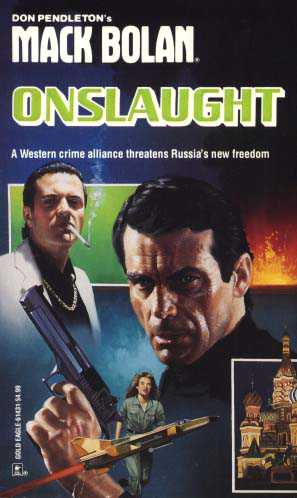 Organized crime is trying to expand into new territory -- the newly capitalistic Russia. In an effort to avoid a throwback to communist days, the Russian president has Bolan work undercover for him, blitzing the mob before it can get a foothold. Ehh. Premise was good, especially with the fact that a turncoat working for the Russian president meant that Bolan was on his own for most of the book. The "lone wolf" concept should have been better than it was. As it turned out, the book was just not terribly interesting. Bolan had far too easy of a time operating in a foreign country with no allies. The villains were caricatures, not well developed. Overall, this one had potential, but just kind of fizzled into boredom and abscurity.
 -
 Bolan is in Germany in the tumultuous days just after the wall fell. Reunification allies and foes are battling, and the Executioner is in the thick of it. This one has Bolan the espionage agent in it, and that is *NOT* his strength. God, he doesn't even speak passable German, but the president of the US is asking him to look into the situation. Friends and enemies are not resolved until the last 20 pages, making for a confusing read. Bolan just blunders along, taking the occasional pot shot at a villain but never knowing who he is fighting. Overall, this one fails to satisfy on a number of counts, and isn't worth the read.
 -
 An evil organization uses eco-terrorism to hold the world hostage. Massive garbage spills along the Hudson river, burning oil rigs in the North Sea -- these are only the beginning. The world is threatened, so send in the team from Stony Man. The beginning of this book was very good. Great action scenes abound, the writing was crisp and the plot was fresh. Unfortunately, it took a slight turn towards absurdity as the book continued. The evil cartels plan -- take over all of South America while the industrial nations pay ransom/bribe money. The terrorist who uses a samurai sword, and then trains his 50 soldiers in martial arts weapons, limiting the use of firearms. The arms baron backer, who like to invent 1 person micro-mini submarines, tanks and helicopters. It's too bad things fell apart because the writing on this was top notch. Fight scenes were done with bruising detail, yet never got bogged down. It comes down to how much you want to suspend your belief. If you don't mind a little fantasy in your action books, "Stony Man VI" is great. If you crave somewhat realistic writing, this one is good, but it leaves a bad taste in your mouth.
 -
 Bolan is in Paris, trying to rescue some kidnapped Americans. Blechh. Another awful book by McDade. It has more of Bolan running around playing spy and less Executioner action. Bolan is clueless in "Deadly Force", wandering around Paris with his allies being shot at. He doesn't know who his friends are. He doesn't know who his enemies are. He just returns fire at those who shoot at him and plods along. Even the action scenes are bad. A shootout in a pitch black room with Bolan throwing paintbrushes around is a new low for the series. If "Fastburn" weren't *SO* terrible, I would give this one 1 star also, but I am reserving that for only the most craptacular Bolan's. This is very close.
 -
 Bolan is in Germany doing something. It must be important, because people are being killed. He's not sure either, but he's doing something in Germany. Bah, this one was awful. Bolan as intelligence agent just never seems to work well. Mercenary, yes, but spy? Not the best use of his talents. Then the plot of this one was so murky that nobody knew who was doing what. Just people dying every 30-40 pages or so. Action scenes were poorly written. Bolan seems totally inept in this one. The editing is also awful. One of Bolan's allies ends up with his throat slit -- but we never saw Bolan find the body!! All of the sudden they are talking about the guy in past tense. Crappy job all the way around. On a side note, I'm especially disapppointed because this is my 100th review here at mackbolan.com . For each of my reviews, I read the whole book again before reviewing so that my opinion is based on the writing, not my memory from years ago or the cover painting. I've tried to be objective -- I write and post my reviews before reading what others have said about the book. I also try to use the whole scale, 1 - 10, not just the higher numbers. I still have plenty of Bolans to read, so I'm planning on being here for a lot longer. If there are too many like "Deadfall", though, I'll have to give up!
 -
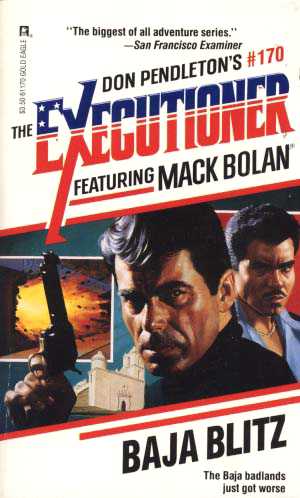 Johnny Bolan hears about 15 dead illegal aliens at the US-Mexico border. In over his head, he calls for his older brother to help out. Together, the brothers Bolan take out a villain intent on dominating the border. Great book. Always good to see Johnny involved. Also, the involvement of corrupt cops puts the brothers a bit at odds with each other -- Johnny feels if they are corrupt, they've lost any claim to protection, while Mack refuses to drop the hammer on even a criminal in uniform. Their ally Louisa was a good addition. While Mack is on his typical blitz, Johnny and Louisa are running their own investigation. All together a well-written, exciting book. Only thing that keeps it from 10 stars is the fact the Mack has his government ties. If he gets caught blitzing the bad guys, he walks, which takes away from the excitement that was there in the earlier mafia war days. Still, a very good read.
 -
 Bolan is about to dispense his brand of justice to a druglord in Florida when a woman puts herself in the crossfire. Bolan aborts the mission in an attemp to rescue her, and ends up seriously wounded. After recovery, it's back against the druglord. Props to this one for having Mack take a serious injury. Although the recovery perios seemed to brief, it still was refreshing to see him out of it and not the invulnerable superhero. Also good was Brognola's reaction. How often must Bolan be out of contact unexpectedly? "White Heat" showed what Brognola's attitude is while Mack is MIA. Other that that, the book is fairly average. Combat scenes are well-written and pull the reader in. The main villains are not so memorable, but the assassin after Bolan, The Jaguar, is a strong and well conceived bad guy. Overall the book is a good read.
 -
 Bolan is out to close a drug pipeline. His journey takes him through Australia and SE Asia as he goes to the source of the poison and shuts it down. Very good adventure. Bolan does it all here. A commando raid, a typical Bolan blitz, jungle adventures, and even some old fashioned charity at the very end. Action is plentiful and well done. Especially good was the fact that Bolan had to work to get where he's going. "Lethal Impact" didn't have the typical "Have Grimaldi borrow a Harrier and set me down a quarter mile from my objective." Bolan had to work to get out of the country and then hump his way through mountains and forests. High points for realism. The only strike against this, and this is a strike against more than just "Lethal Impact", is the fact that Bolan receives 100% accurate intel all the way up the druglord's supply chain. It gets painted with the old "Well, we have all this info but none of it will stand up in court" brush, but it's not realistic. If they have ALL of this info, they must have SOMETHING that would allow for indictments. This is just a minor flaw, however, and the novel is a very good read. Highly recommended.
 -
 Bolan is called to California to try and stop terrorists from fictitious "Mertarda" from entering the US. The chase leads to Alaska and a plot to destroy the Alaskan pipeline and endanger the environment. Pretty good read. The action is crisp and the setting provides for some interesting scenes. The plot is typically vague and the "Mertardan's" seem like mere window dressing, only an excuse to get the plot going. But the book does deliver a good read and has very good pacing. This one keeps you turning pages. Well done.
 -
 All over the globe, various DEA agents are dying, all within the space of a few hours. Obviously, a highly organized villain is out there. Enter the Stony Man commandos. Writing on this one was top-notch. Action sequences well done and the pacing was great, making this a definite page-turner. Unfortunately, plot flaws and errors keep this one from being among the best. For instance, in the first chapter, the moon was "anemic". A few hours later, when Bolan is making a night hit at long range, the moon is full. Also, the bad guys motivation for taking out the DEA agents is vague and never really explained well. And it seemed too strong a coincidence that 4 Stony Man teams all ended their investigations within minutes of each other at various points on the globe, just in time for a coordinated assault. Plot notwithstanding, however, this was a very good book. It just could have been great with a little tuning.
 -
 Bolan and Katz are in Israel invistigating an ultra-right wing Zionist movement. The founders are American so US interests are at stake. Pretty good novel. Nothing outstanding, no new ground is broken, but overall the book is a good read. It was refreshing to see the pro-Israeli's as the bad guys for a change. However, it seemed as if the author had to overcompensate with praise of Israel in dialogue by the various characters. On the whole, the writing and plot on this one are above average and the book gets a good recommendation.
 -
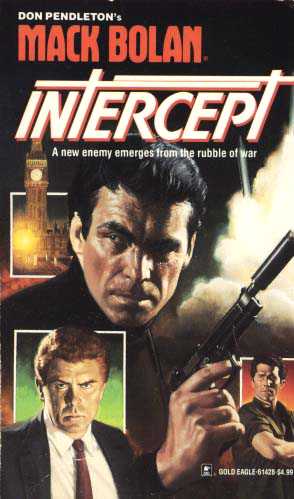 An Arab leader has medium range missiles loaded and ready for attack. The only thing lacking are electronic counter measure circuits. An unscupulous British businessman has been found who will supply them. Bolan must move to "Intercept". Problems abound with this book. First, Bolan is on a mission that he is unsuited too. Since when is he an intelligence specialist? His specialties are penetration and elimination. He is not at his best second guessing this bad guy. And then he does a horrible job. The villain makes it from Britain to France to Yugoslavia to the Middle East all one step in fron of Bolan. In the end, Bolan decides to go to where they know he is headed and wait for him there. Why not do this in the beginning? The unreality doesn't end there. The ending of the book is totally ludicrous. Bolan making a 250 yard pistol shot is well beyond reality. The whole book just disappoints. Good writing is wasted by a terrible plot and unbelievable actions.
 -
 Bolan hears of an arms dealer stockpiling weapons. The dealer has far more weapons than necessary -- something is up. Bolan goes undercover to figure out what's going on. The plot was alright. The bad guys were a little over-the-top. The right-hand man, for instance, is a tall, blond Scandanavian who uses a battle axe. And while nobody trusts Bolan, they keep giving him leeway to do his thing. However, the writing on this one is very good. The book flies along. Action scenes are well done, and there are plenty of twists and turns to keep the pages turning. Overall, a solid entry in the series.
 -
 Bolan is in a fictitious West Afriican nation fighting for democracy. A mercenary is backing a puppet leader while Bolan supports the legally elected president. They fight it out ovetly and covertly. This one did not read like an Executioner. For one thing, Bolan disappears for 40 pages in the middle of the novel. Sometimes, it's alright to see other perspectives or viewpoints, but in an Excutioner, the Executioner himself shouldn't be gone for 20% of the book at a stretch. It also didn't hav the Bolan "feel". Basically, Bolan is following orders, serving in the military, or "advising". He only work solo for one brief mission. It just didn't work as an Executioner novel. The writing was good, and the plot wasn't bad, but overall, this one doesn't stack up to other novels out there. Skip it.
 -
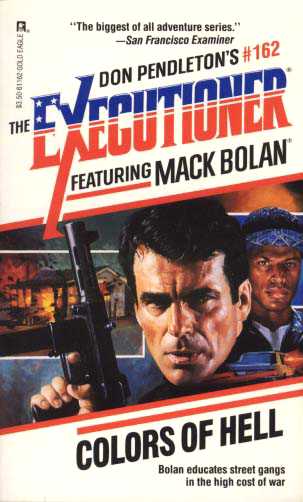 Bolan answers a call concerning gang violence in San Francisco. Two warring factions have gone too far, and Bolan intervenes in his usual fashion. Good Bolan blitz. Bolan is at his best domestically, blitzing hard and fast, playing both sides off against each other. "Colors of Hell" qualifies, as Bolan gets the two gangs at each others throats before long. Much of this novel takes place from other point-of-view -- the cops, the gang leaders, the activist -- and this brings a refreshing change to the series. However, the last action scene was a little disappointing, as much was "skipped over" an left for the reader to assume. Overall, however, this is a good read, and worth picking up.
 -
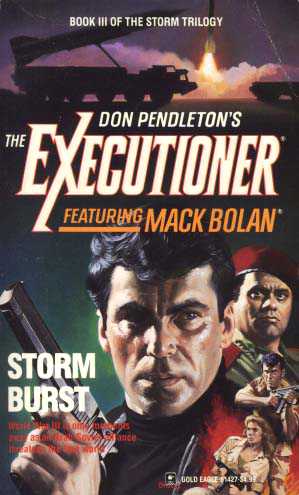 "Storm Burst" concludes the Storm Trilogy, with Bolan and his allies trying to stave off nuclear war with Iraq while fighting against a domestic terrorist threat. Wow. This one is so much better than the other two books in the trilogy. This one actually has a plot rather than just an abundance of battle scenes. Further, the plot is very good. A highlight involves Bolan and Phoenix Force caught in hostile territory with only pistols. This is fresh, different than some of what has gone on before. The flaws, though, are because of continuity. While this is supposed to be a direct continuation of the previous books, all of the sudden there is a new organization, the UAR, that has emblems, uniforms and more. In just a day or two? Impossible. Also, Bolan's ally flip-flops sides so much that her character is ultimately a disappointment. Overall, though, this one is a very good read. It stands alone well enough to skip the first books in the trilogy and only read this one.
 -
 This is the middle book of the "Storm Trilogy". It's very disappointing. As the US prepares to go to war with Iraq here in 2002, it's interesting to see how it happened in the Bolan universe in 1992. It should be a great read, "ripped from the headlines" and all. But there is so little plot that it truly disappoints. Every other page is a gunfight. Obviously, Mack Bolan uses weapons, and there are battles to be expected, but this was over-the-top. Also, the realism of the earlier books is gone. This one has Bolan serving as weapons officer on an attack chopper while having two different conversations. This one has the president deciding that of all the diplomats and experienced negotiators, Bolan is the best one to send to Iraq. "Eye of the Sotrm" os just a little too unrealistic with nowhere near enough plot to sustain it.
 -
 Terrorists strike the US and its allies. Bolan, Able Team and Phoenix Force try to protect citizens and get to the bottom of the attacks. Ehh. The action writing was very good in this one, especially the up close battles. However, the writing is less good when trying to detail an entire invasion. Too much is going on and it's impossible to focus on a single soldier or even a squad -- it's just too big. Also, the battle scenes are basically all there is in this novel. The plot is nearly non-existant. It just serves to link the battles together. Finally, a rule that I have for trilogies is that each novel should be readable on its own. The plot should wrap up for each novel. The books should be linked, but each should be complete by itself. "Storm Warning" fails that test. It ends mid-battle. Don't have the next one? Oh well, you're out of luck. There is some good writing, and it seems very relavant now with the current situation with Iraq, but overall the book disappoints.
 -
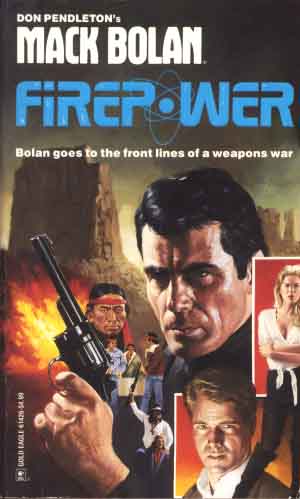 Bolan gets a tip about a shipment of arms that may be highjacked. Following up on this leads to corruption and muder throughout the defense industry. "Firepower" started of great. Bolan is in trouble with his raid on the highjacked truck. The villain, Alisha Witt, was a fresh face compared to the more traditional bad guys that usually populate the Excutioner's world. Things were looking good. Unfortunately, after a few chapters, Witt disappeared, only to show up again towards the very end. The double and triple crosses that the arms dealers made were senseless and just muddled the book. The Native Americans in the novel seemed to be played as patsies. There is no strong sense of climax with the novel, it just sort of sputters and dies. It's rated fairly high because it was different and had potential. Sadly, the novel did not live up to expectations.
 -
 Terrorists execute simultaneous attacks on embassies in the US, Britain and France. The Stony Man commandoes arrive to try and catch those responsible while preventing further attacks. Average fare. The teams split up and follow up leads in America, Britain and France, and rather predictably take out the terrorist nests before predictably heading to the terrorist base where, predictably, they take on the head terrorist. Nothing really outstanding. One interesting note was that "Stony Man IV" seemed to at least pay attention to the fact that the commandoes aren't the only authority figure out there. They had to interact with FBI, local and foreign police, and other foreign governments. This gave it a more realistic feel. The team didn't just show up in other countries and run their own investigation. This was a highlight. Otherwise, this book was nothing really outstanding. Certainly a good read, but certainly not an outstanding one.
 -
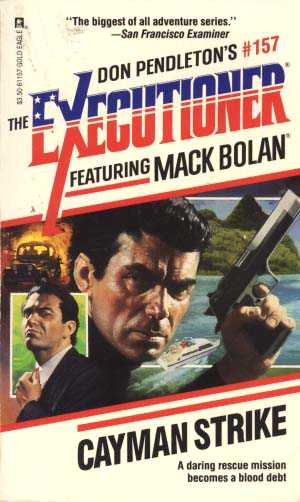 A plane carrying an undercover DEA agent crashes in Grand Cayman. The government there refuses to allow his extradition, so Bolan jumps in. This was a good one. Bolan has a lot fewer resources than usual, and always seems in danger. Also, being handicapped by the agent's wife, and the agent himself, who is suffering through a concussion, makes Bolan's work that much harder. This one brought back memories of the early Mafia wars where Bolan is the lone wolf struggling against the enemy. In addition, a few chapters were written from the point-of-view of his allies. This made for some interesting reading, moreso than many of the books. This one is excellent, and well worth some effort to track down. Highly recommended.
 -
 Bolan meets up with an old friend in the Aloha state. There he finds Chinese Triads and the Japanese Yakuza selling poison to the Hawaiians and decides to end their commerce in typical Bolan style. While this book breaks no new ground, it was still an enjoyable read. Finding an ally from Bolan's past was a pleasant surprise. Likewise, the attention to detail was well done. In "Hawaiian Heat" Bolan meets with the people who give him the targets for his Blitz. Too often, it seems he just has this list of gang hideouts, and it's not realistic. The only complaint is minor -- no new ground is broken here. It's all typical Bolan, but it is done very well.
 -
 Normally, I like to put a few sentences of plot synopsis here. Just a brief summary, reviewing what the book was about. That's virtually impossible for "Hardline" because the plot is nearly incomprehensible. I think the author confused Bolan with Bond for this one. The hero of this book does more sneaking than fighting. He infiltrates a bizarre cult, impersonating some sort of voodoo master. The whole book felt wrong. The plot, vague as it was, did not get revealed until over halfway through the book. Then, instead of taking out the bad guys Bolan-style, the Executioner plants some sort of taped confession. "Hardline" is not at all like the rest of the series. Avoid this dog; it's not worth it.
 -
 The US Air Defense computer system is hacked into, sending American fighters chasing electronic phantoms along the American-Russian border. This leads to an international incident, as American and Russian fighters are shot down. Enter the Stony Man team. The plot rolls along nicely on this one. The team splits up, each member making their own contribution. The hacker menace struck a real chord, and seemed more plausible than some of the novels. In fact this was damn near a 10-star book. Unfortunately, the plot was derailed with 50 pages to go. I know that this is not a popular view, but I really have an issue with Jack Grimaldi. I find it impossible to believe that a civilian can fly any sort of aircraft. The controls for a F-16 must be totally different that a Harrier, but Grimaldi flies these better than any Navy Top Gun. Come on, this is unrealistic. "Stony Man III" took this to a new extreme, however, when Grimaldi is installed as a payload specialist on the space shuttle Atlantis. Wha? He's an astronaut, too??? That knocked the book down 2 stars. Except for some unbelievable moments, "Stony Man III" was a very good book, and one of the tops in the series. Good action and good (for the most part) writing make this one a worthwhile read.
 -
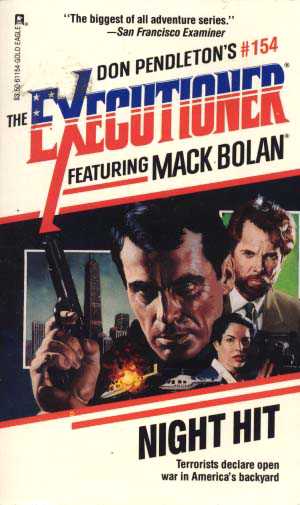 Terrorists have come up with a new campaign of terror. They blitz an American city over night, taking hostages and demanding ransom by 9 AM when the banks open. Then they fade away. After 2 cities have been hit, Bolan comes in time to try and save the third, Chicago. Very good book. Tense action scenes and gripping plot combine to make this one a winner. The winter setting is nice too; it gives more character to the book, it's less generic. The only thing keeping this from the highest rating is that the ending seemed slightly rushed. It was too easy for Bolan to wrap this up, and the final confrontation was less than expected. Overall, however, this is a great read and highly recommended.
 -
 Bolan heads to South Florida. There he meets up with a rag-tag team of Cuban exiles who are fighting the equivalent of the Cuban mob. Bolan joins forces to throw off their oppressors. The plot was similar to a hundred other Bolan books, but somehow made fresh by the little twist of the cubanos plight. And while it proved the old adage about never wanting to be the sidekick of a hero, the writing was original enough to sustain interest. Little things were annoying with this book -- the way Bolan was treated as a messiah by the cubanos, the way Bolan risks life and limb sneaking into a fortress only to decide to leave a Marksman medal, the way Bolan fires on a boat but then wants to save the victims from drowning -- but the intangibles make this a good read and worth the time.
 -
 A new crop of heroin is appearing on the West Coast, and Bolan tracks it to a rogue KGB agent. Bolan pursues him to Afghanistan. Many betrayals later, Bolan kills him. Oy, what a rotten book. There were way to many double and triple crosses. It was nearly impossible to tell who was fighting who. And Bolan was uncharacteristically wishy-washy. Half the time he didn't want to be there, or he was captured, or needed to be bailed out by an enemy. Very disjointed, not at all cohesive -- this one is a low point, and not worth the effort to get through 300+ pages.
 -
 A Japanese research scientist has created a deadly virus. He is kidnapped by a madman who will release it on the world if his demands are not met. Bolan is the last chance to save the world. Excellent book. The plot seemed somewhat feasible, ala the anthrax scare of late 2001. The book was well-written and flowed very well. Action scenes were well-done. The only shortcoming of the book was the hardline KGB supervisor of Bolan's ally. As the Cold War ended, it may have been possible for a person like this to exist, but it seems very extreme and unrealistic today. Except for that, "Combat Stretch" was a fantastic read, and it comes highly recommended.
 -
 An American agent is captured by Cambodia's Khmer Rouge. Bolan is set to get her out. That's it as far as plot goes is "Death Load". This one was a stinker. There are several supporting characters, but they never get a moment to shine. Bolan has misgivings about them, but there is no explanation for his feelings. Foreshadowing is a nice literary device, but when it's used, there has to be something happening at the end. Not so with this novel; it stops with unresolved plots. It seems like there must have been some serious editing here by the Gold Eagle team. The margins on this book are huge -- it still goes 220 pages, but there is a lot of white on those pages. Whole subplots must have been snipped. The end result is a virtually unreadable mess. Why was Bolan in Cambodia in the first place? What "secret" was Bolan's contact Bishop holding? What happened to Kwanh at the end? What happened to the contact Trang? All of this are unanswered. Very disappointing effort.
 -
 Bolan and Phoenix Force are moving towards the conclusion of their blitz against the Columbian cartels. While Able Team wraps up in Miami, Bolan and friends finish up their jungle hunt. This one was a good book. The plot lines tie up nicely. Able Team's mission, after being MIA in "Evil Kingdom", resumes in time to wrap up here. The main plot line, though, follows Bolan and Phoenix Force in Columbia. The action scenes are well-written, and the pacing in very good. A complaint with this book is that Bolan doesn't seem to accomplish much. This is a knock on a lot of the books -- how many times has Bolan blitzed the mob only to have them survive?? -- but in this particular book it was more obvious. While the author was probably trying to make the point that life goes on in Columbia, in came off as feeling that Bolan and his allies wasted 10 days there. Overall, though, the book was a good read and a satifying ending to a good, if slightly dated, trilogy.
 -
 Bolan and Phoenix Force continue their South American blitz. Bolan is in Columbia trying to nail down cartel leaders. He finds a priest and a young justice minister who serve as his allies. Meanwhile, Phoenix Force is in Panama trying to capture a corrupt government leader. Their mission is complicated by the U.S. invasion, searching for the same target. The book is pretty good. Some action scenes are well done, and this book, the second in the trilogy, has a much more cohesive plot than the first. However, "Evil Kingdom" is not without its flaws. Phoenix Force is under utilized. They pop up every 30 pages or so for a firefight and then disappear. Nothing they do seems to really advance the plot. They were strictly superfluous. Meanwhile, Able Team is completely MIA. Ths would be fine if their role was to be limited to random firefights (like Phoenix Force). However, Lyons was kidnapped at the end of the first book. This entire book, spanning 4 days, shows nothing of the rest of the team (including Turrin) searching for Lyons. Instead, we get blurbs when Bolan checks in -- "Any word on Able Team?" "They're running into strong interference." "Stay hard." Unsatisfying. Overall, though, the main Bolan plot is good and carries this novel through some of the rough patches. It isn't great, but "Evil Kingdom" is a vast improvement over "Blood Rules" and makes for a good read.
 -
 Bolan and his Stony Man allies are briefed about the current drug problem in Columbia. The three largest cartel leaders are described, along with their Panamanian ally, and a hit woman, La Arana, in Miami. The crew decides to divide and conquer. The division of labor, however, is quite bizarre. The largest job, taking down 3 cartel leaders, falls to Mack Bolan (along with Grimaldi). It would seem that this task may need more help than the other two, but Mack and Jack have it covered. The plan involves playing off the dealers against each other, but then Bolan targets each dealer. When they realize that they each have taken hits, the begin to realize that maybe they face a common enemy. Bolan should have focused on one to get him to launch a war on the others, but decides instead on a three-fronted war. The rest of the book suffers similar plot disapointments. Phoenix Force does little in Panama except try to rescue a kidnapped McCarter. Able Team fumbles around Miami for a while, making little or no progress. The identity of La Arana is easy enough to guess well before it is revealed. All in all, this was a series of action vignettes, and not really a novel. Granted, it is part of a trilogy, but each part should stand on its own. "Blood Rules" does not stand on its own; in fact it falls flat on its face.
 -
 Bolan is in NYC. A gang war between Vietnamese and Columbian drugdealers has heated up and is spilling to innocent people. Enter the Executioner. With the help a NYC undercover detective, Bolan blitzes the Big Apple. This was a very good novel. It's loaded with detailed characters, but it doesn't overwhelm the reader with so many that they can't be tracked. The action scenes are well-written and satisfying. There are a few flaws, however, that keep this from getting a perfect rating. The biggest is the death of a female cop. Bolan meets her, beds her, and watches her get killed within 10 pages. The he promptly forgets her. The scene was very abrupt and didn't add anything to the book. Another flaw was that Bolan was asked by at least three cops if he had a license for his armnament. Since when is that a problem for him? Perhaps an occasional run-in with the law, but in this one he was working with the cops, fighting alongside them, and then asked if he had permits for the weapons. Unbelievable. However, the rest of the writing was excellent and the plot was very good. Excellent read.
 -
 Middle Eastern radicals have taken Americans hostage. An overt show of force in that region could lead to war, so the Stony Man commandos are sent in. This was a great book. The plot seemed perfect for a small force of fighters--it wasn't like the Stony Man team had to face an army; the small unit size was perfect. Also, the reaction in Washington, when the Army and Navy are told that they are to "play along" with Brognola's squad seemed very realistic. The only reason that SMII loses a star is for the addition of an extraneous plot line. The kidnapped Americans is a perfectly legitimate reason for the Stony Man team to be in the Middle East. For some reason, the author felt he had to add a nuclear menace to the story. It felt superfluous -- just saving the hostages should have been enough. Nevertheless, this is still a very good novel.
 -
 Bolan crosses the Atlantic to help out the British and legitimate Irish governments take out a IRA splinter group. Before long, mayhem ensues. "Blockade" has a more unique plot than most of the novels, but unfortunately it doesn't do anything with it. Bolan is supposed to be tracking down Irish terrorists, but racks up the frequent flyer miles by going to Africa and Boston, all while allegedly trying to save a kidnapped ally. The action writing is good, and the plot continued to move along, but these crazy detours really detracted from an overall good novel. Once again, a SuperBolan suffers from subplots seemingly added to boost the page count. Not well thought out, but still an o.k. read.
 -
 Bolan is on his own. American hostages are being executed, but the president is powerless to act. Furthermore, he has specifically ordered Bolan to stand down while negotiations take place. However, Mack Bolan isn't going to stand around while terrorists execute helpless citizens. Alone, unarmed, he single-handedly goes to the Middle East trying to save the hostages. Wow. "Payback Game" is a great book. Not since much earlier in the series has Bolan been so challenged and so alone. Too many times in the novels that precede this, Bolan is given so much aid from the government that he barely has to work. This time he is unarmed and on his own. It's frustrating when Bolan takes a commercial flight to Tokyo, and then ends up with (yet another) 93-R, custom fitted with silencer. Then he flies to Nepal, only to be handed (yet another) 93-R. Not in "Payback Game". The knife fight scene early in the book has some of the best writing evr to grace a Gold Eagle page. The plot twists and turns so the reader is never bored. The tension continues to mount throughout the book, never letting up. This one has it all! The only complaint isn't with the book itself, but with the continuity of the series. This would have been a great time for Bolan to lose his presidential free pass, and to be back to taking on missions on his own. Novels like this one are what the Executioner series should be about.
 -
 Bolan is in Chicago. That's about all of the plot that I could figure out in the first 70-100 pages. Names are dropped at an alarming rate. Organizations are mentioned but not discussed--I never did figure out exactly what the "Instituto de Fraternidad" is or why I was supposed to care. After a while, though, you stop trying to figure out a plot and just go along for the ride. Actually, it wasn't a bad ride. It just seemed that this one was supposed to be a Super Bolan and somebody hacked it down to 216 pages. Most Bolans are worth more than the some of their parts. This one gets its 6 stars strictly for the writing; nothing else shows up.
 -
 Terrorists are hitting Japanese-owned businesses in the US. Innocents are dying; it's time for Bolan to look into things. This was well-written action. The plot was a bit vague at times, but fairly cohesive. The reader was pulled in quickly when Bolan, in Japan on his was to meet Brognola, gets caught weaponless in an ambush. This scene is one of the all-time best. The book continues well, but does have some low points. The villain's motivations are somewhat nebulous -- is he fighting for America or trying to earn himself some dough. And "Siege" falls into the common trap of having Bolan end the mission on the last page. This is great for excitement, but it leaves the reader wondering, especially in this book. Bolan is wounded, in Japan, and possibly on the wrong side of the Japanese law. How does a wounded 6'3" caucasian get out of the country? Overall, though, the book is one of the best. While te plot line of Japanese buying out America is slightly dated, the book is still a great read.
 -
 Bolan heads to South America to investigate the death of an investigator. He bounces in and out of trouble and winds up with an ally. Together, they board a cruise ship that ends up being hijacked. Blehh. This one ends up being too predictable and unsatisfying. Bolan's allies end up dying without Bolan helping out. There are huge plot holes that get summed up as, "Well, I guess we'll never know why that happened?" The twist is easy to spot long before Bolan does. Bolan spends much of this novel moving ineptly from place to place. Only the originality of the cruise ship setting saves "Helldust Cruise" from being a total letdown.
 -
 A long-time friend of Bolan's has been kidnapped, with an unusual message left at the scene. Meanwhile, a "Bolan Blitz" has started in Denver, while Bolan himself is miles away. Two rival mafia families blame each other, and prepare for war. Enter Mack Bolan. This is one of the better novels of the series. It flashes all the way back to when Don Pendleton was writing the books. Bolan always seems at his best in lone-wolf mode, and although Leo and Hal make appearances, they don't bog down the narrative. The action is fast and furious, the writing better than average, and the ending is satisfying. The only reason this doesn't get a higher rating is that no new ground is broken with "Fatal Error". Nearly all has been done before. However, it is still a good read, and a welcome addition to the series.
 -
 Bolan takes down a drug smuggler only to find that he may have been CIA sponsored. Before long, Bolan is involved in a power struggle in Nicaragua, fighting both corrupt officials and CIA agents gone rogue. Blehh. Maybe this book meant something in the early 90's, but it has not stayed fresh. The Cold War battle has lost a lot of punch in the last decade. However, it was the writing that really brought this book down. Action scenes are few and far between. Even worse, the narrative is extremely disjointed. For several chapters, the point-of-view bounces between Bolan and a CIA ally. However, there is not enough to sustain interest in even one plot line, much less two simultaneous plots. Overall, this was a poorly thought out book. The drug smuggling aspect vanishes before being fully exposed, and Bolan is dropped into a confusing, poorly-written, dated plot that fails to excite.
 -
 Oh, how I wanted to like this book! The plot was fantastic -- terrorists have been aquiring low level radioactive isotopes. While these are not bomb-making quality, they are still enough to cause damage and poison thousands or millions. In fact, the opening attack shows terrorists taking out innocents, and also killing many emergency personnel who are the first to respond. If that plot doesn't touch a nerve then you must have been in a cave for the past year. But the writing was so bad. Names are dropped left and right. I understand that an international terrorist ring probably has 20 or 30 members, but do we need to know them all personally? It was tough to keep up with who's who without a crib sheet. But even worse was Bolan finding a new ally, and then forming a new anti-terroist unit, "Force 90". It was ridiculous and absurd that as terrorists are plotting the radiactive nightmare, Bolan is training these yahoos on the use of the H&K G-11 assault rifle. And don't even get me started on the Iraqi president calling on the US president to invite Force 90 to launch an attack in Iraq. Way too far out there. I'm still giving this one 4 stars because of the great plot, but the writing is seriously lacking in this one. "Direct Hit" is a great disappointment that did not live up to its expectations.
 -
 Bolan heads South to Miami investigating a major cocaine pipeline. First stop -- a biker bar, where Bolan needs to get a prisoner who will lead him up the food chain. Great start for an Executioner, but, unfortunately, "Wild Card" doesn't keep its focus. Before long, female DEA agents and undercover amnesiacs start cluttering the book, and the pace deteriorates. Too many chapters in this book are from a point-of-view other than Bolan's. A few chapters about the villains plan may be acceptable, but the whole DEA agent and biker with amnesia plot was too much. It was unbelievable, and also a burden on the reader. The final scene was also a disappointment. For 200 pages, Bolan is chasing ten million dollars of cocaine; in the last 20 he is taking out Swiss arms dealers in Toronto. This was an unwelcome turn of events, and seemed like a half-assed effort to try and pull the novels diverse threads together. It was unsuccessful.
 -
 Bolan head to Mexico to cause some leaks in a drug pipeline. While he is casing the place, and second squad assaults the drug lord. Bolan helps take down some drug dealers before heading back to the States. After a call to Brognola, he learns the identities of the mystery team and briefly becomes their ally. Before long, there is a kidnapped Cuban general that Bolan must protect and Bolan travels to Cuba and meets Fidel Castro. This book lacked cohesiveness as a novel. It seemed more like a series of vignettes, tied loosely together. The action was excellent, and Bolan was forced to fight in some different circumstances. Especially entertaining was Bolan on the defensive; his survival and existance are based upon his ability to move. When he is protecting the Cuban kidnappping victim, he is up against some new circumstances that make for good reading. Bolan's meeting with Castro is also entertaining. One part of the novel that hasn't held up well, though, is how sick they make Castro. It seems like he'll croak within a month of the book's publication; he's lasted another dozen years. Overall, the book is an average read for the series. Good action is weighed down by a thin plot, making "Cutting Edge" good, but not great.
 -
 A new US attack helicopter is being tested in the desert when it fails catastrophically. Brognola thinks something is up, so he asks Bolan to look into the electronic developer. Before long, the mob and the KGB are taking shots at Bolan. The first half of this book is great. It races along, with a great tempo and excellent battle writing. However, about midway through the book seems to come undone. The plot gets a little more vague, and the villains barely have time to be established before being blown away by Bolan. It's too bad that the tempo and writing of the first half couldn't be kept up. This one seemed like a real winner, and it's still better than a lot of novels, but the end is uneven and not as good as anticipated.
 -
 Bolan is tipped off that two Iranian terrorists have made it to America. He takes them out, but is concerned as to why they are meeting with the NYC mafia drug czar. Some investigation at Stony Man tips him off that a new drug for terror pipeline is opening, and Bolan must smash this new threat to America. A good book but not a great book. There is a good action scene at the beginning of the book when Bolan face the terrorists, but then quite a lull as he drives to Stony Man farm, gets dossiers on the villians, and heads off to the Middle East. Grimaldi is included in this mission but very underused -- he just shows up in the last 25 pages to bail out the big guy. The cartel that Bolan is up against islarge, but the members are not well-defined. After Bolan wipes out half of the drug dealers, there is still confusion over who is left and what their little "quirk" is. Reading it was tough -- it was like , "Didn't Bolan kill the Shiite last chapter? Oh wait, that was the Lebanese grower who doesn't like to fly." Good action in the last 100 pages, but the book would have been better with better pacing, spreading the action out over the whole book instead of concentrating so much at the end.
 -
 Bolan is investigating some missing chemical weapons. He is dogged at every turn by assassins. Brognola asks him to drop that investigation and check out an oil rig that seems suspicious. Again, hit squads follow Bolan's every move. Miraculously, the both cases are tied together, and Bolan is able to acommplish two missions for the price of one. This one didn't seem to fit well with the rest of the series. Brognola's dialogue doesn't ring true. It was almost as if Bolan was talking to himself--the slang was identical. The idea that Bolan would drop one of his own missions after being shot at to ivestigate an oil rig also felt false. Bolan doesn't work for the government, and has the right to refuse a mission. It was way too convenient that the missions dovetailed together so smoothly. The writing is generally good, but the author spends a lot of time on the technical details of the weapons. While it was interesting to learn that the Stechkin 9 mm SMG has an ultralight bolt countered by an inertia system within the pistol grip that delays the return of the bolt and reduces firing rate to manageable proportions, having this go through Bolan's mind in the middle of an action sequence broke up the flow. It was as if he was reading a "Guns & Ammo" in the middle of battle. The final assault scene on the oil rig was too "James Bond-ish" for a Bolan novel. Leading 15-20 commandoes to have a 3-stage assault on 30 guards seemed like the end of a Connery Bond movie, especially when there are guys in hang gliders firing RPG-7's, and other squad members on sailboards. Creative, yes; realistic, no. The smuggler O'Riley was a good character, and the book had a good tempo, but it just didn't work as a Bolan novel.
 -
 England and France are joining efforts to build a tunnel under the English Channel. This miracle of engineering, if it ever is built, will be the first time in history that England is connected to the mainland of Europe. Bolan is brought aboard as a trouble shooter because of 2 apparent sabotage attempts. Obviously, the book is a bit dated, considering that the tunnel opened in May of 1994. However, the biggest problems with the book had more to do with logic and pacing. Bolan enters the country under the guise of Colonel John Macklin. That cover fools nobody, though, and all of the bad guys figure out it is that "renegade American Mack Bolan" that they are up against. Why bother? Also, the troops against Bolan know that he is a hard ass, but continue to send ineffective hit teams against him, every 20-30 pages or so. Sending a college professor to do a soldiers job is ridiculous, especially after Bolan has mowed down 20+ soldiers already. The deepest flaw of the book, however, was that it tried to make Bolan into something he isn't. Working as the government's bitch has never really suited the Executioner. He is much better when he is lone wolf, or at least at arm's lenghth. He worked so closely with the British government that it really hampered his style. The only time Bolan could really get going against the evil-doers was when they attacked Bolan. This is especially disappointing because the back cover promised a Bolan blitz, but it did not deliver. Underwater scenes are good, and the novel does have some good action. Unfortunately, it is not a top-notch Bolan read.
 -
 Bolan is investigating a series of murders. In each case, the victim was a serviceman already pronounced dead, whose name is on the Wall, the Vietnam War Memorial. The ties go back to a black bag CIA operation early in the war. Bolan spends entirely too much time playing private dick, and not enough time taking out the bad guys. Some sleuthing is important; and non-stop action would become tiring, but this novel probably had about 15 pages of Bolan in action. This is far too little. Also, there is a lot of confusion over exactly what Bolan is tracking down. He wants to get a handle on the murders, but has the CIA in his way. This means Bolan is entirely in the dark as he looks for leads. Unfortunately, the reader is also left in the dark trying to piece together who is behind the murders. Ultimately, however, the low rating comes from Bolan's reaction when he finally unravels the plot. Not to give too much away, but for most of the novel, it seemed Bolan was trying to stop the murders. By the end, his mission was to finish what the murderer started. This one leaves a bad taste in your mouth.
 -
 An outspoken critic of the Mob's influence in the construction industry ends up having an "accident" on the high steel. Shortly afterwards, his father also meets his death, along with a co-worker who witnessed the accident. Bolan answers a plea from the worker's daughter to investigate her father's death. Good read, but very uneven. The plot started out great, but was a little implausible that the daughter can make two phone calls and find Bolan. Great scene where Bolan takes a serious wound. It gets tiring to have Bolan "creased" or to have a bullet "whistle by his head". The big guy took one in the chest and needed a week to recover -- well done. However, the author is a little too ambitious. What starts out as Bolan investigating construction problems and the Mob infiltrating labor unions ends up with a full scale gang war among NYC's five families. The names come fast and furious, and before long you need a scorecard to remember who is associated with which family. Another weak point is when Bolan twice has some serious Mobsters under his sights, but decides that they haven't done enough to merit death, or that if he cuts off the head, the body will grow back. Bolan didn't seem himself. A strong point wast the return of the French female assassin first seen in Tightrope. She seems to be a match for Bolan, and pursues him throughout the novel. Ultimately, this novel reads much like Tightrope, where the writing can be very good, but some of the characters don't live up to their reputations.
 -
 All along US highway I-95, murders are occuring. Seemingly senseless, the nation is gripped by terror. The murders are actually part of a drug-war between the Columbians and the Mafia, and Mack Bolan decides that enough is enough, and moves in to stop the murders. The book started off great. The highway plot was fresh and unique. The expectation was that Bolan would go from cell to cell, uncovering leads and stopping this crime wave. It didn't play out that way. Bolan is tipped off who the responsible party is way too soon in the book, and begins his usual "infiltrate the mob" routine. It made for a good story, but broke no new ground. From Bolan's infiltration to the amusement park shoot out at the end, it all seemed very predictable. The writing is good, but the plot was nothing new.
 -
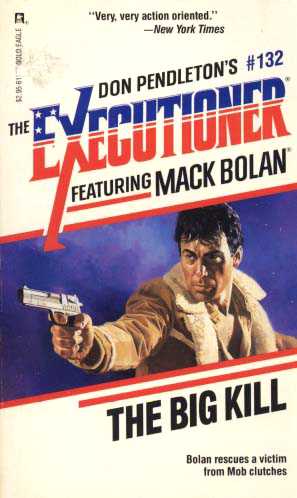 The son is a college graduate has accepted help from the Mob without realizing it, and is now confronted with the death of an old girlfriend. Her death leads him to the realization that the Mob is involved in his own businesses. Before he can turn evidence, the Mob tries to hit him. Bolan is involved in the protection of the businessman. Good read. The winter setting is a nice change of pace, and the snow plays a major factor in the book. Bolan as a bodyguard is a good change also -- it takes away his "combat stretch" and makes him more vulnerable. This one was a quick read, and a good one. Low points have to do with editing. Somehow, it feels like this book is missing something. The conclusion comes to quickly, and some plot threads are left unexplained. Perhaps this was meant to be a larger book; it seems incomplete. Good read for the most part. A real page-turner.
 -
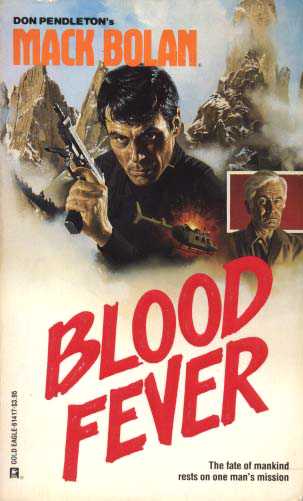 Bolan is chasing an arms dealer. He takes out some Japanese in Colorado. Then off to Houston. Then off to the Italian-Swiss border. Finally, South America, where Bolan confronts the dealer. The whole book felt stretched, like it was a regular novel padded up to SuperBolan length. The first 150 pages are Bolan wiping out a terrorist cell, but finding a single clue that leads unerringly to the next cell, with no false trails. The writing is humdrum. From the first 50 pages it was obvious who was going to live and die. The big twist at the end was a let down. The finale features Bolan piloting a helicopter while firing rocket launchers and dropping grenades. It was too big a stretch of reality.
 -
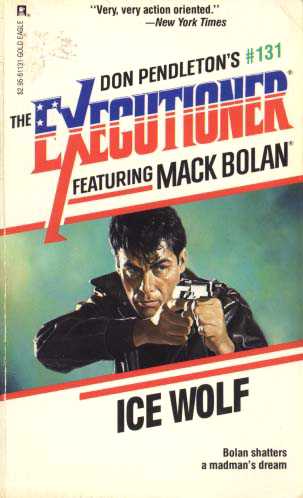 Bolan is back in D.C.. He shows up to help his old friend Leo Turrin investigate the murders of several members of the Witness Protection Program, but ends up saving the world from the Nazis. The writing on this is very good. Some of the action scenes were a little hard to follow, as the descriptions of the locations were lacking at times. On the whole, though, the writing was good. The plot, too, was mostly good. However, there were some inconsistencies. Bolan's cover was blown way too early. He is tagged by the enemy and watched by them far sooner than possible. Also, the Nazi's plot was somewhat far-fetched. The whole "kill the Witness Protection people in Washington D.C. so they won't tighten presidential security" was ludicrous. And Bolan must have set an air-speed record for his jaunt to Cairo in the middle of the crisis. All that aside, the book was still a page turner, and kept interest high from beginning to end.
 -
 Bolan sets off to investigate the killing of a federal officer at Boston's Logan International. A twist develops when the mafioso responsible for the killing kidnaps the dead agent's wife and daughter, holding them as hostages against Bolan. The book was very well written. This author has a real feel for Bolan, but isn't afraid to push some limits. His supporting characters, both allies and enemies are thoroughly developed, and provide this novel with much of its appeal. Also, not every character dies, which means that there may be some continuity with the series. This one is very good. Bolan always seems at his best against the mob, and he is certainly in top form for this enjoyable read.
 -
 Average Bolan fare. Bolan decides to take out a new mob casino being built in Haiti. Along the way, he befriends so Haitian rebels and gives his assistance to their resistance movement. The book is ok. It's nothing that Bolan hasn't done before. He hits hard on the mob and on the Haitian governement. Especially good was the hits to free a captured rebel. With a technique that goes back to "Continantal Contract", Bolan demands the release of a prisoner, or he will take vengeance every hour. Good book, but not great.
 -
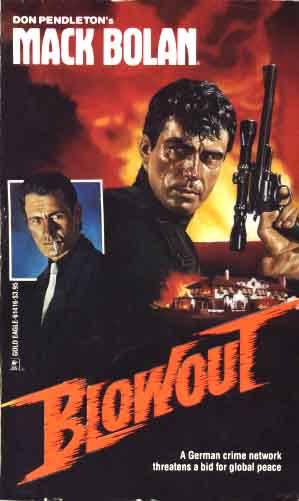 This book had so much potential! Bolan is framed for a murder in Hamburg, Germany. He flees, but is pursued by law enforcement and various gangsters as he tries to unravel what is going on. "Blowout" started off well, but wuickly deteriorated. There were too many sides in the battles. Bolan was always getting his ass kicked. Two or three times, he needed a mobster to save him. He was in way over his head. The worst, though, is that, after 300 pages, when he finally figures out who the bad guy is, he doesn't do anything. Instead, he gets a mobster to turn states evidence, and the bad guys conveniently get killed in a traffic accident. Bah. What a let down.
 -
 Good Bolan romp. Bolan is in Europe and is approached by another US secret service, the Fox Den, for his help is shutting down a new heroin pipeline. Two lovely ladies assist Bolan. The agent from the Fox Den goes undercover with the Union Course leader of the smuggling operation, while a French police woman (whose undercover role is that of a fashion model) helps Bolan search France for the heroin refinery. Very good writing. The author seems to have a real feel for Bolan. Even better, he doesn't limit himself to Bolan's point-of-view for the entire novel. We see action through his allies eyes, which is a refreshing change. The enemies are well-developed, and one is even a hold-over from the author's recent SuperBolan. The description of the weapons is priceless. Bolan's thoughts on the Beretta submachine gun need to be read to be fully appreciated. The plot moves along nicely, although there were times when it seemed all Bolan did was drive back and forth. Other than the occasional pacing problems, the book it very good, and comes highly recommended.
 -
 Bolan is free of the government, beginning his "Lone Wolf" struggle to root out terrorism. Or so it was promised at the end of "Dead Man Running". Instead, he investigates a POW camp in Cambodia that may hold Americans. The book falls flat. I don't think that the author has a really good grasp on the Bolan character. In one instance, Bolan kills a KGB officer so Bolan can impersonate him and infiltrate the camp. Then Bolan realizes that the officer brought his wife, so Bolan kills her. Bolan always has trouble taking a female life. He'll do it, but usually with fleeting regret. This woman is an innocent. I can't believe Bolan would kill her. After the camp is infiltrated, it begins to be a war book, not and Executioner novel. Bolan takes command of troops, and spends the combat barking out orders, rather than using his special talents. Jagninski also did this in his only other Bolan book, "Tiger War". While it's interesting to see Bolan in a command role, it's not what he's best suited for. Stick to combat! Interesting novel, but feels like someone took a Vietnam book and Search/Replaced the main character with "Bolan". Does not read like an Executioner.
 -
 This was a very good book, bringing Bolan back to his roots. He severs ties with the government and goes on a blitz in Washington D.C., leaving dozens of bodies in his wake. This was a good wrap-up to "Day of Mourning". Bolan identifies his adversary and terminates with extreme prejudice. The book has it all. The only reason this one stops short of perfection is the writing style of some of the action scenes. I guess ot was meant to show the quick thing, but the one word paragraphs were extremely distracting. Hard to follow. Jarring. Cheesy. Move! It kept an excellent book from being the best. Still a very good novel, near the top of the series.
 -
 How do you review a reference book? This is an excellent summation of the Mack Bolan books by Gold Eagle up to this point. It has many different sections. The first is an intro by Don Pendleton. This was pretty lame. Pendleton tried to act like he was still writing the books. He invented a great character, but he needed to step away. "I guess maybe only ten percent of what chugs through my mind when I'm writing finds its way onto the page. The stuff that stays in my head is the true inside story of Mack Bolan." (p. 13) Stop already! You aren't writing the books anymore! Next were two short stories. The first one was set during the Vietnam war and featured Bolan and Nile Barrabas. This was good, but very short. The second story dealt with the fate of the Laser Wagon. The Laser Wagon should never have been born, and its death was mostly just the tying up of a loose end. Good riddance. The next 30 pages are the combat catalog. This is basically the beginning of the "Weapons in Review". It shows many of the weapons Bolan and his allies use. Nice illustrations. The written material was somewhat inconsistent. On some weapons they give the weight, but not on others. The magazine capacity shows up sometimes, but not all the time. Good info, but it would have been nice to show the same info for all, for comparison sake. Next section is maps of Stony Man farm. Good to get visual info. The next section is the most ambitious -- The Gallery. It cross-referenced every character in the past 50 or so books, and gave them a quick bio. Most ended with the phrase "a Bolan kill". Good for looking up, great for continuity. Something like this should be done every year. Summarize the preceding 24 novels, list the characters, and maybe their first appearance. Great for character development, story arcs, but it'll never happen. After this was a "Dear Don" section where Pendleton answer's reader mail. Crap again. More D.P. bullshit about how when he writes a book, he thinks this way, or he feels that way. Cut the crap Don; you don't write the books. There are then 10 pages dealing with the 240 serviceman killed by the Beirut bombing. This was moving, especially after the Sept. 11th attacks. The 1983 bombing has largely been forgotten, but this was a nice memorial for those servicemen who gave their lives. The book ends with excerpts form Able Team and Phoenix Force. These were out of context and basically a waste of paper. "The New War Book" is an interesting read, useful for its historic value. Good concept.
 -
 Bolan is following a drug pipeline from Atlanta to Key West to the Caribbean. Meanwhile, a dissident KGB agent has escaped the USSR and is fleeing to the Caribbean. Also, a young, attractive woman (along with her 8 year old son) has to go pick up her brother's body from the Caribbean and return it to the US. These plots weave together for a very good novel. Bolan isn't sure what he is up against until the end of the book. He makes a new ally, a young pilot named Chase Murphy. It's great when Bolan has someone besides Grimaldi fly him around. This new pilot is a fresh face with good attitude. Bolan's other ally, a millionaire named Drake, also gets high praise. Excellent supporting cast here. Very good writing too. Action scenes move along. Bolan's soft side with kids is evidenced as he entertains the 8 year old. The plot is a stretch, but not totally unbelievable. Altogether, a fine novel.
 -
 Bolan is out to stop terrorists from destabilizing the world. Bombings and assassinations have become common enough in Europe that Brognola calls in Bolan to stem the rising tide of terror. However, something bigger is going on, and Bolan must decipher the clues to prevent a catastrophe. This book had some sections that were excellent. Bolan hiking through the arctic circle was fantastic, 10-star writing. Unfortunately, the whole book couldn't sustain that writing level. There were other parts that were just too coincidental, too fortunate to believe. Likewise, the ending, where the entire villainous staff meets and tell Bolan every plot they had while he acts like Hercule Poirot was just to incredulous to be believed. Good book, decent plot, but highly varied writing style. When in good, its great, but when its bad, its lousy.
 -
 Bolan's mission starts off vague and ill-defined. Something about Star Wars plans, but Bolan is just spinning his wheels for a while. The plot then develops into a chase for a half-Vietnamese half-American boy who is to be bartered for the plans. Everyone is after the boy. The kids grandfather send a mercenary team in. The Vietnamese Army wants to snag the boy, and thus the plans. A rogue CIA agent is after them as well. Oh, and an ex-US Army sergeant named Bolan. The diverse plots slow the book initially. By the time we have each side figured out, the book is well under way. The number of enemies also makes the conclusion somewhat disappointing. It seems as if the author ended the book, then realized that he hadn't dealt with the CIA guy. He gets like 3 pages at the very end of the book to wrap up his plot, and it is poorly written and very contrived. However, the meat of the book is very tasty. Once the sides are established, the interaction is good, but it just takes time to get going. Bolan's soft side with kids is again exposed, giving the character more depth. Not the best book in the series but still a good read.
 -
 Bolan is once again chasing arms dealers. However, this chase turns into something more unusual as Bolan faces enemies at every turn. From Washington to France to Sweden to Angola to Liberia to the Caribbean, Bolan is dogged by enemies. Something unusual is up with this case. The book is very good. The writing is fresh, but done with a great knowledge of character. The plot, while using the arms dealers that show up as villians every third book or so, is surprisingly unique. The book would score higher if it weren't for a sudden unexplained and uncharacteristic change of allegience that saves Bolan at the end. When he is captured and things look grimmest, for no reason, a villian suddenly switches sides to save his life. Cop out. The final hunt at the end of the novel is great. Bolan set up traps and snipes at a war party, taking them down one by one. Excellent. An above average book.
 -
 Bolan invades Saudi Arabia to protect US interest and to defeat a planned Russian coup in this so-so novel. With the help of some Arabian friends and his old buddy Grimaldi, Bolan saves the day. Writing is not bad, but far from the best in the series. Nice to see Bolan and his allies catching fire, but this one seemed over-the-top. One ally dies, and Grimaldi ends up leaking like a sieve by the end of this one. Also, very hard to follow without a map of the Arabian peninsula in front of you. Bolan crosses the country at least twice to put an end to the coup. The novel also loses points due to some unbelievable incidents that occur. Bolan survives being shot down twice. His Cessna outflies F-16s regularly. No way. There are better reads out there. This one can safely be skipped.
 -
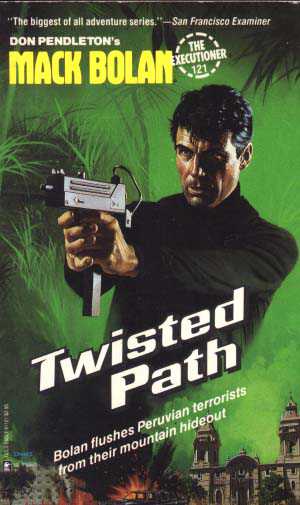 The back jacket of this one talks about Bolan going to Peru to take on terrorists. Peru. What does Bolan have to do in Peru?!? As the novel plays out, though, there is a somewhat logical reason for him being there. It still comes out as somewhat awkward -- Bolan sometimes seems little more than Brognola's bitch, doing scut work that someone else should be taking care of -- but this time it flows, and the decision to enter Peru is strictly Bolan's. Writing is excellent, and the plot, while slow at some points, still packs plenty of punch. Bolan in a Peruvian prison is good, although the scene where he takes down 7+ gangsters in hand-to-hand combat seemed a stretch of reality. Also, Bolan NOT getting the girl was a good change of pace. All in all, this is a fine read, one of the tops in the series.
 -
 Good writing and good excitement made up for nearly non-existant plot. Bolan seems to simply end up in the action scenes, almost tagging along. However, intangibles score high, giving this one an above-average rating.
 -
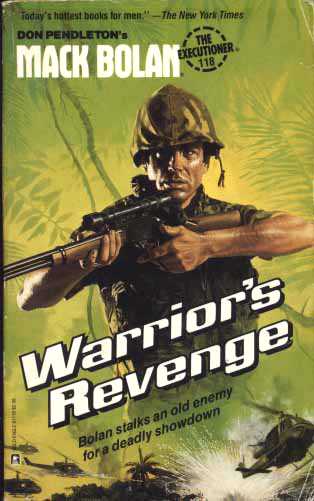 This is a superb novel. Bolan is forced to return to Vietnam, and flashes back to his first few days during the Vietnam War. Flashbacks don't always work, but here the blended seamlessly. The book is so well-written that the author must have done a tour or two himself. Very authentic writing. Great plot, great writing -- this is one of the best.
 -
 Good writing on this novel, and the pacing was good, but the plot was very weak. There is an "Escape Network" operating in Europe, smuggling people on both sides of the Iron Curtain. Very unbelievable. While investigating, Bolan stumbles into a junkyard -- that just happens to be one of the bad guy's secret bases! Very unbelievable. Bad guys try to kill Bolan 2 or 3 times, but when they finally have the drop on him, they decide to capture him rather than kill him. Very unbelievable. However, the good writing overcomes the weak plot to make this an above-average tale.
 -
 Bolan is forced to protect what he despises. Brognola asks him to babysit some mafiosi who have entered the witness protection program, but are being targeted due to a government leak. Very good book. High points include Bolan teaching some rookie Justice department agents. Bolan seems to be a good teacher (see #93 "The Fire Eaters") and it was interesting to see him in this role once again. Another good point was Bolan's inner turmoil over protecting the filth of humanity. Brognola has to work hard to get Bolan to accept the job. Even at that, Bolan remains far from convinced, and debates whether a more permanent solution is the better choice. A good twist at the end makes this one a worthwhile addition to the series.
 -
 Solid book. Bolan is trying to rescue a kidnapped teenage computer-whiz, as well as stop a civil war in the Middle East. Good plot, but not a ton of action. Lots of sneaking around rather than full-blown firefights. It seemed like a good mix. The ending seemed rather hastily done, as if the author found out there were only 8 pages left and had to get Bolan out of danger in a hurry. A good point was the reaction of the teenaged hostage to Bolan--how does he know Bolan is going to help him? Well done. Not spectacular, but solid.
 -
 This one hits the bottom. The blurb on the back should have been a warning: "China--a stinking place to die in!". The book has the worst writing in a Bolan novel. The narrative jumps from character to character by the paragraph. The most interesting character isn't Bolan, it's a Chinese helicopter pilot. Why we care about him is a mystery, and his fate is unresolved at the end. There is a reason that this author only wrote one book in the series. Even at that, he wrote one too many.
 -
 Bolan is up against an old nemesis. Paradine has kidnapped some diplomats and is holding them hostage until he can trap Bolan. This book was a disapointment. Paradine, who was so calm and sinister in his first appearances, was a shadow of himself. Granted, Bolan has given him something to fear by almost killing him, but this assassin damn near pissed himself whenever Bolan was around. Considering he planned the whole affair, this was not realistic. Also, Bolan was not up to his usual standards. Twice he got caught in firefights that he needed outside assistance to save his bacon. Once in a while this is understandable; twice in the same book made Bolan seem a buffoon. Also, the return of the War Wagon (now the Laser Wagon) was not a good thing. When Pendleton was writing in the 70's the wagon seemed cool. For the 80's, it seemed a stretch, especially as all the action is in Europe. With a Phoenix emblem on the outside, this is not the subtle vehicle that Bolan used before. It might as well have had a target painted on it. The good parts of the book were the action writing. Bolan was in several firefights that were well-written and exciting. The plot moved along and was realistic. Overall, though the book is just about average.
 -
 Bolan's hit on a yacht near the Bahamas leads him around the world to Libya as he tries to rescue an ex-lover. Not a bad tale, but not the best one out there. Some of the descriptions seemed lacking. It was hard to get a feel for the places Bolan visited as the descriptions were somewhat vague. The book is brought out of mediocrity by a poignant flashback and epilogue. Bolan does have feelings, and its good to read about them. These pages are above average in an average book, and the saving grace of this novel.
 -
 "Skysweeper" is a good, solid entry into the series. Bolan is undercover in a military compound researching a "Star Wars" laser-based missile defense system. He uncovers a nest of KGB agents acting against the project and moves to stop them. Good plot, good writing, but seemed just a little flat. Bolan saving the president anonymously was a nice touch, especially since Bolan is so recently separated from Stony Man. Also nice to see someone other than Grimaldi piloting an aircraft. Too often, it seems that if there is flying to be done, the author has to find a way to drag in Grimaldi. This worked just as well. A trifle outdated in 2001, but a good read. It brings back Cold War memories.
 -
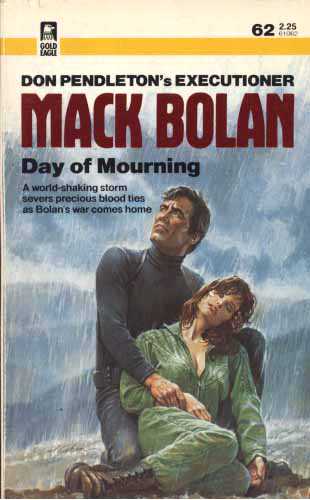 This is a very good book. However, there ar times when the authors forget who Mack Bolan really is. The opening vignette having Grimaldi drop Bolan out of a Harrier into the ocean to recover a stolen nuclear weapon is unreal. James Bond does this (see For Your Eyes Only), not Mack Bolan. The blitz thru Washington is good, but unsatisfying. Yes, it's a trilogy, but as this novel ends, Bolan still doesn't know who is behind the sabotage. Also, the death of April (featured on the cover, so this is not a spoiler) is in the last 2 or 3 pages. She's barely gone when the book ends. "Day of Mourning" must refer to the *next* day, not the day that the book covers. These points may seem picky details to some, but they add up to a less satisfying book than others in the series. Good for it's background info, this book is not the best in the series.
 -
 The best word that comes to mind for this book is ridiculous. Bolan, astride an elephant, charges 200 soldiers, and kills them all. Bolan, captured by the enemy and held at their base, gets into a sword fight with his nemesis, defeats him, and manages to escape the numerous armed guards. Ridiculous. The writing is poor, as well. The action scenes are flat. In the big invasion of the base, Bolan acts as a forward observere, calling down artillery strikes. I'm not sure he fired a shot. What a waste of his talent, and what poor knowledge of his character shown by the author. Avoid this one.
 -
 Excellent effort in the series. This book has it all. It brings back allies from as far back as #5 Continental Contract, an enemy from Flight 741, as well as references to #91, The Trial. This gives the book a great background to start the action. The book then keeps the level high. Bolan is at his best infiltrating the Ku Klux Klan and their cousin organization, the Aryan Vanguard. Bolan shows his skill in areas other than just combat. He also shows a moral side not seen often, as he is forced to blow up a church, despite the regret he feels. This one is a winner. It has it all and it delivers.
 -
 Pretty good novel. The action quotient in this one is high, as Bolan and Grimaldi play 3 sides against each other, leaving over 300 dead. The hit man after Bolan in this one is well-developed, but at times seemed almost a caricature. With a scarred face and a collection of the heads of his vanquished foes, he was a bit over-the-top. One disappointment was the lack of motivation for the arms dealers. The back jacket talks about them wanting to start the Fourth Reich, but it gets lost in the book. Even arms-dealing itself seems a ludicrous proposition in the Executioner's universe. Every novel that deals with arms dealers ends up with a double cross. Why anybody would choose that profession is a mystery. Good action scenes bring up the score on this one. Not the best plot, but certainly excellent action writing.
 -
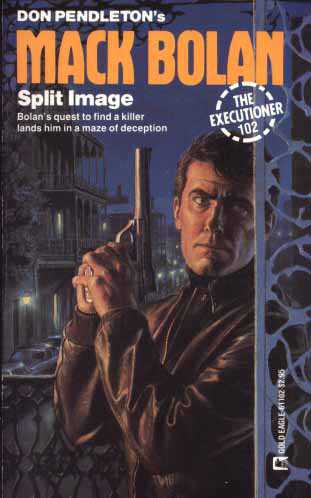 Unremarkable book. Bolan is after a KGB agent, but spends a good deal of the book arriving too late to do much. Some duplicity makes for a good twist or two, but not enough to sustain interest. The most unreal scene in the book involves a presidential motorcade, in Dallas, exactly where JFK was killed. The Secret Service neglects to secure what Bolan identifies as the best place to shoot from. And after the attempt, Bolan and the KGB agent are both allowed to exit the building. Way too unbelievable.
 -
 Good, tight read. The kidnapping of someone close to Bolan ups the emotional attachment. Other books ("Circle of Steel" comes to mind) have Bolan trying to save hostages, but without the same emotional investment. The danger also seems more real. You know Bolan will survive -- there are 200 more books in the series -- but it's touch and go for some of the supporting characters. This adds to the power of the book. However, it is also a liability. Nino Tattaglia deserved a better send-off then the phone call desription that this book provided. His departure should have been told in the first person, not "off screen". A good job with number 100.
 -
 Bolan has a child?!?!? The book must be read through to discover the implications and veracity of this statement. The book is a good tale, living up to the Super Bolan name. It involves Bolan's fast in Vietnam, the mafia, the KGB -- all of his favorite targets. He blitzes hard in this one. Only fault with the book is that a lot of the Vietnamese dialogue seems like it was taken directly from fortune cookies. This was supposed to show old world wisdom, but it came off as preachy and fake. Other than some dialogue issues, the book is a winner.
 -
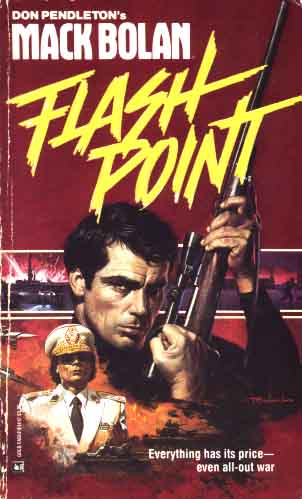 Bolan is after another arms dealer. This one has a deal to sell C-4 to Libya. Bolan and his allies eliminate the threat. <yawn> This one plodded along rather slowly. It seemed like the author was being paid by the page rather than by the plot. The nowel almost seemed like two separate sub-par Executioner plot ideas were joined into a single longer book. It didn't work well. Bolan in merc raining school was ok, but the book left too many plots unresolved and had a very un-Bolan moment on the last page. (Since when does Bolan arrest people??)
 -
 Mack Bolan is hot on the trail of the world's most disorganized and stupidest arms dealer. This arms dealer not only deals arms, but also wants US senators killed, and UN peacekeepers hijacked. He skips along the globe from Montana to Haiti to Syria, screwing up again and again. Bolan has little to do in this novel; his enemy is so inept that Bolan is hardly challenged. The novel also introduce an assault rifle that sounds like the bowcaster Chewbacca used in the Star Wars movies. It has twin grenade launchers mounted crossbow-style around an assault rifle. Every time they used one of these it was hard not to laugh. The weapon seemed ridiculous. Not a very satisfying novel.
 -
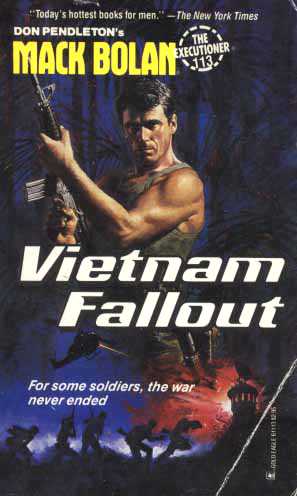 Bolan returns to Vietnam. This book has Bolan trying to avenge the death of a fallen comrade by heading to Vietnam, his old killing grounds. The book lacks consistency. Bolan is overcome with emotions as he returns to Vietnam, but he has already been back since the end of the war (see Executioner #43, "Return to Vietnam"). It also has Bolan teaming up with rapists, figuring some help is better than none. It doesn't ring true to Bolan's character. His whole reason for returning to Vietnam is shaky. Bolan is out to aveng a buddy, but his friend is barely described before he is wasted. The whole book rings false. Bolan is a lot less sure of himself in the jungle than he should be. The book works, but only barely. Action scenes are nice, but the plot is definitely below par.
 -
 This book was one of the toughest Bolan's to get through. It read like a Miami Vice marathon. There is a briefing early in the novel about a task force Brognola sets up, but then all but one or two of the people in the breifing disappear and are never seen from again. The enitre novel is filled with these inconsistencies. The drug theme was probably very cutting edge in 1987, but it does not seem to have held up well since then. The Mob connection seems almost an afterthought, and remains unressolved at the end of the book. This is a weak entry. Avoid wasting you time and skip this one.
 -
 This SuperBolan is about Bolan investigating a train wreck where 60+ people died. No, it's actually about a kidnapping of an old army buddy. Scratch that. It's really about Bolan leading a coup to overthrow a brutal African dictatorship. Sorry. It's really about destroying heroin fields in the middle of Africa. ... and this is only halfway through the book. To say that this book lacks focus is an understatement. There is some sort of connection between all of these events, and the mob and KGB get in on it too by the end of the book, but it reads like a series of vignettes, not a real Mack Bolan novel. The action is good, but the plot is so weak and spread out that there is no interest sustained. Far better novels are out there. Save your time and skip this one.
 -
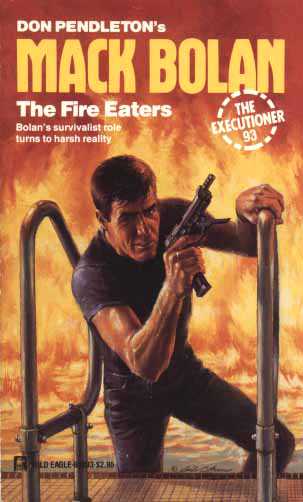 This was a fantastic read. It has Bolan at his best, in a series of undercover roles. There are great villains, including a teenage hitman who comes close to ending Bolan's career. There is a great plot. There are superb supporting characters, including the CIA agent after Bolan. The Russian threat at the end is a little weak, seemingly added just so Bolan could boost his body count, but overall this is an excellent book.
 -
 This is a very different book from most in the series. Except for a few pages to try and establish current-day continuity, the entire novel is a flashback to Bolan's last days in Viet Nam. The action writing was superb, among the best in the series. However, there was too much effort trying to tie names from the current series to Bolan's Viet Nam days. The worst was Grimaldi, who performed an Evac for Bolan. Grimaldi can recognize the leadership and heroic qualities of Bolan although he never sees his face. This was too forced, and jarred the reader back to reality. Also, Bolan delivers a child as battle rages around him. Again, this was too unbelievable, and brought the reader out of the novel. The strength of the writing overcomes these momentary lapses and earns this novel a spot among the best of the series.
 -
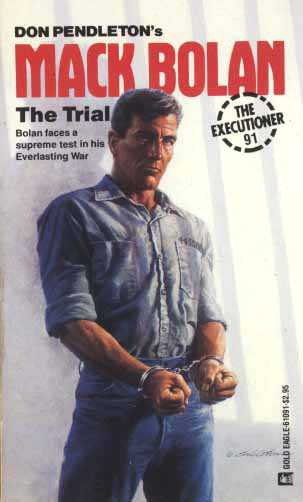 This is a fantastic book. While it doesn't have the explosive action of some of the other novels in the series, the threat of danger is much more intense. Bolan is in a jail cell, and lacks his "combat stretch" that has kept him alive for so long. Because of this, he is much more vulnerable and does not seem so invincible. Bolan testifying on the stand is also great. Add to the the names from his past who show up and there is a terrific feel for the court room scenes. The entire legal side is well done. This one is a classic read, among the best in the series. Highly recommended.
 -
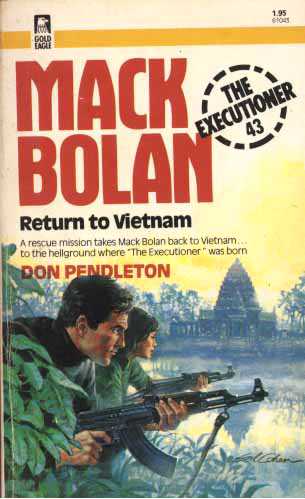 Good early tale from when Bolan was working as Colonel Phoenix. Grimaldi dumps him in Vietnam, and Bolan proceeds to bust out an American POW. Entire book spans less than 4 hours, so action is frentic, but not too much plot. Entertaining read, but not the best of the series.
 -
 This was a very exciting read. The entire novel takes place over the course of eight hours. Bolan is charged with protecting a corrupt Iranian general exiled to Baltimore. In addition to the assassination squad after the general, the general has hired the mob to protect him, forcing Bolan to watch his back. In addition, Bolan must also protect the general's wife from her abusive husband. This makes Bolan's job protecting the general that much more repulsive. The action in this is great, and it would have been a 9-star easy if not for a HUGE oversight. Specifically, Bolan kills his enemies with a gun that he doesn't have! Bolan gives his Beretta to the general's wife. Then, 10 pages later, he uses it to take out the invaders! This really bugged me--it was very jarring. To make matters worse, the gun then disappears from Bolan back to the general's wife! This continuity error cost an otherwise excellent book 2 stars. Beside that, this was a top-notch book.
 -
 One of the first books after Pendleton stopped writing the series, Double Crossfire is a good, exciting read. The plot involves Bolan stopping an enormous shipment of Heroin to the US, and getting involved in a Turkish/Armenian conflict. Bolan has a lot of decent battle scenes, and the supporting characters seem fully developed. There are some reflective scenes, where Bolan muses on his war, but they are not as extensive as some that Pendleton would write. The story keeps moving, the characters are good, and the battle writing is fine. A good, but not outstanding entry to the series.
 -
 Another below par effort by Pendleton. It seems after 20 or so books, he has run out of steam with Bolan. The plot concerns smuggling and some sort of intra-mafia rivalry, but Pendleton describes that only as "us vs. them", without being too clear as to who's on what side. The biggest redeeming value of this book, however, was the large role of CB's in the novel. The "break-a-break good buddy, catch you on the flip-flop, 10-4" jargon was like a flashback to the late 70's. The discussion Bolan has with about CBs could be applied today to internet chat. Other than that, the book had little merit. Turrin is thrown in as an afterthought. One or two good battle scene, but the end disappoints. This book was a fair read, at best.
 -
 Very poor novel in the series. Pendleton has confused the mafia with SPECTRE from the old James Bond movies and given them a plot to control the world's money. Unfortunately, Pendleton couldn't come up with a plausible way, so he just makes reference to a vague plot. Terrible. If you want to use a plot, at least come up with a halfway decent plan for it to work. Instead, he has Bolan discovering clues, but never the whole plot. It is real bad, Pendleton assures us, without ever making clear what it is. As good points, Grimaldi, Brognola and Turrin all show up and help out Bolan. Also, the odd mother-daughter combo that Bolan rescues make for an interesting side plot. However, the villains are only superficially developed, and the final battle at the end lacked development also, lasting about two pages. Nowhere near the quality of some of the earlier books in the series.
 -
 Another early Don Pendleton opus. To really enjoy thes, you have to think back 30 years, and try to see the world without cellphones and the internet. Bolan gets into a jam at Dulles and has to escape via a jetliner to France. The novel reads like a series of 3 or 4 vignettes, each having Bolan face another, different problem. There was not a cohesiveness to the plot. Nevertheless, it is an entertaing read. Pendleton knows adventure fiction, and he writes a great tale. Bolan seems much more human and concerned with his own mortality in these early books than in the more current ones. However, he does not over philosophize his actions either. This blend makes for a good read. Last 20 or 30 pages are the best of the book, and very worthwhile reading.
 -
 Good story. Sometimes it's hard to believe that the current Mack Bolan started off so humbly. He has a much harder time of it in this early novel, but is at his best sowing dissention among various factions. In the end, he kills fewer himself, but the body count stays high. Weapon desciptions are nearly non-existant in this novel. Bolan uses a "machine pistol" of indeterminate make. However, the calender is followed much more closely than the current novels, so you have an idea as to when this is taking place. Pendleton wrote good fiction. This is a rock solid entry in the series, and highly entertaing. Interesting info: Carl Lyons (of Able Team) is mentioned as having a wife and small child!
 -
 An average entry in the series. Bolan is searching Africa for Uranium, and stumbling through a civil war as he tracks the radioactive isotope down. Action scenes were good, but too far between. Bolan spent a lot of the book lost in a desert, or being captured by enemies. I found it disappointing that Bolan needed outside help escaping not once but twice. Add that to his being lost in the desert, and it's definitely not Bolan's best outing. Final scene, complete with countdown timer and underground hidden lair seemed like the end of a Sean Connery Bond movie. Overall--good, but hardly the best Bolan out there.
 -
 Very good yarn. Starts off with good action and develops a very good plot. Lots of leads take Bolan across the country. Meanwhile, Brognola faces problems of his own. Rock solid entry in the series. Favorite scene: Bolan saving a dolphin. Awesome.
 -
 Not the best entry in the series. This book was far too confusing to earn a good review. The plot was vague at best, and then the double- and triple-crosses made you unsure who was trying to do what. Action scenes were well-written, but the overall plot was too vague to make a good read.
 -
 Very good Bolan story. Minor quibble--he starts off wounded, and relates how he got wounded in a flashback. Why not describe the battle where he is wounded in real time? This would build tension, I feel. However, the book is still excellent. The heroism of the townfolk is what impressed me the most ... little vignettes relating how each person decided to make a stand for their town. Very good book.